Welcome to the ultimate guide for creating your dream open-concept farmhouse floor plan. Modern homeowners love this design for its mix of rustic charm and modern functionality. It turns traditional living spaces into bright, open areas perfect for family and friends to gather.
Your floor plan design can change how you live at home. By removing walls, you make your home feel bigger and more welcoming. The modern farmhouse layout is more than a trend; it’s a way to make your home better.
Whether you’re updating your home or building a new one, knowing about open-concept design is key. This guide will show you how to create an open-concept farmhouse that shows off your style and meets your family’s needs.
Key Takeaways
- Open-concept farmhouse designs create interconnected living spaces
- Eliminate unnecessary walls to enhance spatial flow
- Blend traditional farmhouse aesthetics with modern functionality
- Maximize natural light and social interaction
- Design a flexible living environment that adapts to your lifestyle
Understanding Open-Concept Farmhouse Design Fundamentals
Farmhouse architecture has changed a lot, mixing old charm with new living styles. Your journey into open-concept design starts with learning about farmhouse history and style.
Historical Evolution of Farmhouse Architecture
The history of farmhouse architecture is full of practical design. Early farmhouses were built for rural life, with small layouts that were efficient. Families needed rooms that could handle many tasks in a small space.
- 1800s: Compact, multi-purpose rooms
- Early 1900s: Increased focus on kitchen functionality
- Mid-century: Introduction of more open living spaces
Modern Interpretations of Open Floor Plans
Modern open floor plans have changed farmhouse design, making living spaces open and flexible. These spaces remove old walls between kitchen, dining, and living areas.
“Open-concept design isn’t just a trend—it’s a lifestyle transformation.” – Architectural Design Magazine
Key Elements of Farmhouse Style
Farmhouse style mixes rustic charm with modern looks. Your design can include:
- Natural wood textures
- Neutral color palettes
- Vintage-inspired accessories
- Functional, minimalist furniture
| Traditional Farmhouse | Modern Open-Concept Farmhouse |
|---|---|
| Closed floor plan | Interconnected living spaces |
| Separate cooking area | Kitchen as central gathering point |
| Limited natural light | Maximized natural lighting |
By following these design principles, you can make a space that feels both old and new.
Space Planning and Flow in Open-Concept Living
Creating an open-concept farmhouse layout is all about smart space planning. It turns your home into a smooth, useful space. Making sure the room flow is right is crucial for a space that feels big yet cozy.
Your space planning should aim to make paths that link areas without feeling too tight. Imagine your home as a flowing landscape. Each area should blend into the next smoothly.
- Define functional zones through strategic furniture placement
- Use visual cues to separate spaces without physical barriers
- Create clear circulation paths between living areas
“Good design is invisible – it allows people to move effortlessly through a space without feeling restricted.” – Professional Interior Designer
Good farmhouse design mixes different living areas while keeping it open. Here are some important tips:
| Design Strategy | Key Benefit |
|---|---|
| Floating Furniture Arrangements | Improves Traffic Flow |
| Consistent Color Palette | Creates Visual Continuity |
| Architectural Sight Lines | Enhances Spatial Perception |
By using these ideas, you can make your open-concept space welcoming and useful. It will feel both big and meaningful.
Designing an Open-Concept Farmhouse Floor Plan: Key Considerations
Creating the perfect farmhouse floor plan needs careful thought and strategic design. Your home’s layout affects how you live, move, and interact with your space. Understanding key considerations will help you create a functional and inviting home.
Successful open-concept farmhouse designs focus on three key elements: traffic flow, sight line optimization, and natural light integration. Each is crucial for a comfortable and harmonious living space.
Traffic Flow Patterns
Efficient traffic flow design is key in open-concept spaces. Your floor plan should allow smooth movement between areas without bottlenecks or awkward paths.
- Create wide walkways between key living zones
- Avoid placing furniture that interrupts natural walking paths
- Consider furniture placement to maintain clear routes
Sight Line Optimization
Sight line optimization makes your space feel spacious and connected. By strategically placing rooms and elements, you can improve visual flow and make your space feel larger.
“A well-designed floor plan tells a story of movement and connection.” – Architectural Design Principles
Natural Light Integration
Natural light transforms farmhouse interiors, making them bright and welcoming. Thoughtful window placement and open design can maximize daylight throughout your home.
| Design Strategy | Impact on Space |
|---|---|
| Large Windows | Increased Natural Light |
| Open Floor Plan | Improved Light Distribution |
| Strategic Mirror Placement | Light Reflection |
By focusing on these key considerations, you can create an open-concept farmhouse floor plan that is both functional and aesthetically pleasing.
Kitchen Layout Strategies for Open-Concept Farmhouses
Designing an open-concept kitchen needs careful planning. It should be both functional and inviting. The layout should balance practicality with the warm, welcoming feel of farmhouse style.
The key to a great open-concept kitchen is a smooth flow. This connects the cooking and living areas well.
- Implement the classic work triangle between sink, stove, and refrigerator
- Create a central island that serves multiple purposes
- Use consistent color palettes to unify adjacent spaces
- Select durable, easy-to-clean materials
“The kitchen is the heart of the home, especially in an open-concept farmhouse design.” – Interior Design Expert
Your kitchen island is key in open-concept farmhouse layouts. It can be a cooking station, dining area, and social spot. Choose materials that match your design, like natural wood, marble, or butcher block.
Lighting is vital in defining kitchen zones in an open space. Pendant lights over the island, under-cabinet lighting, and recessed lights help. They create visual separation while keeping the space airy and connected.
Creating Distinct Zones Without Walls
Designing an open-concept farmhouse needs smart thinking about dividing space. You aim to make areas that feel connected but still separate. This is done without using traditional walls.
To change your space, use furniture placement tips that divide areas naturally. Placing furniture in a smart way can define zones. It keeps the space feeling open and big.
Furniture Placement Techniques
- Position sofas and chairs to create invisible room boundaries
- Use console tables as subtle dividers between living and dining spaces
- Arrange furniture to establish clear traffic flow patterns
Using Area Rugs and Lighting
Designing a farmhouse space involves clever choices. Area rugs and lighting are key in setting up different zones.
| Design Element | Zone Definition Strategy |
|---|---|
| Area Rugs | Creates visual separation between living areas |
| Pendant Lighting | Highlights specific functional spaces |
| Accent Lighting | Establishes mood and boundaries |
Architectural Elements as Space Dividers
Think about architectural features that divide spaces softly. Partial walls, decorative columns, and varying ceiling treatments can make natural divisions. They keep the open farmhouse look.
“Design is not just about appearance, but how spaces function and flow together.” – Unknown Interior Designer
Incorporating Storage Solutions in Open Spaces
Open-concept living needs creative storage ideas to keep your space tidy and stylish. You must keep your area clean while having practical storage that fits your farmhouse design.
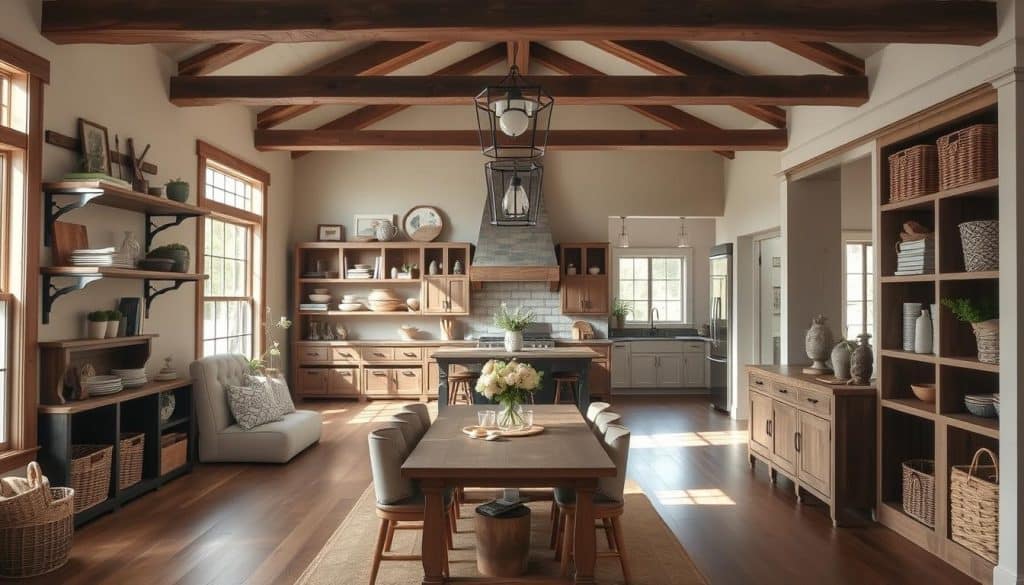
Smart storage can turn your living area into a beautiful and functional space. Here are some ways to add storage without messing up your home’s open layout:
- Use furniture that has hidden storage spots
- Put up floating shelves that match your farmhouse look
- Build storage along your walls
- Go for vertical storage to save space
“Smart storage is the key to maintaining a clean, inviting open-concept living space.”
Your storage solutions should look good and work well. Check out these ideas to keep your home looking clean and open:
| Storage Type | Benefits | Best Used In |
|---|---|---|
| Open Shelving | Looks good, easy to reach | Kitchen, living areas |
| Hidden Cabinets | Keeps things hidden, looks clean | Entryways, living rooms |
| Bench Storage | Provides seating and storage | Mudrooms, dining areas |
Pro tip: Mix open and closed storage to add interest while keeping your space tidy. With these farmhouse storage ideas, you’ll have a space that feels big and organized.
Balancing Privacy and Openness in Your Floor Plan
Creating an open-concept farmhouse design doesn’t mean you have to give up privacy. You can make spaces that feel both open and cozy with smart privacy solutions.
The secret to great open-concept living is knowing how to set up spaces without walls. Your farmhouse floor plan can have amazing privacy with creative design tricks.
Strategic Room Placement
Placing rooms wisely is key to keeping personal space in an open layout. Here are some smart tips:
- Put bedrooms away from busy spots
- Use architectural features as natural dividers
- Make smooth transitions between different areas
Sound Management Solutions
Farmhouse sound management needs creative ideas. Soft materials and smart design can cut down on noise:
- Install acoustic panels in important spots
- Use plush area rugs to soak up sound
- Choose furniture that helps block sound
Visual Barrier Design
Visual barrier design lets you have privacy without losing your open floor plan’s look. Check out these options:
- Sliding barn doors
- Decorative screens
- Strategically placed shelving units
“Privacy in an open concept space is about creating intentional moments of separation.” – Interior Design Expert
Your farmhouse can mix openness and privacy well with smart design. It respects both the need for connection and personal comfort.
Material Selection for Open-Concept Farmhouse Interiors
Choosing the right materials makes an open-concept space truly special. Your selection sets the look, blending function with fashion.
For an open-concept farmhouse, pick materials that work well together. Mix rustic touches with modern flair for a balanced look.
“Materials are the language of design – they tell a story without saying a word.” – Renowned Interior Designer
Essential Farmhouse Interior Materials
- Natural Wood Surfaces
- Stone Accents
- Reclaimed Materials
- Neutral Color Palettes
Textures in open-concept designs add depth and interest. Combining rough wood with smooth metal creates a lively, modern space.
Material Compatibility Guide
| Material | Texture | Visual Impact |
|---|---|---|
| Reclaimed Oak | Rough, Weathered | Warm, Rustic Charm |
| Polished Concrete | Smooth, Industrial | Modern, Sleek |
| Wrought Iron | Metallic, Textured | Structural, Strong |
Choosing materials that go well together is key. By mixing textures and finishes, you create a welcoming, lively space.
Maximizing Natural Light and Views
Natural light makes open-concept farmhouse interiors bright and inviting. It connects us to the outdoors. By optimizing natural light, you can greatly improve your home’s feel and function.
When designing your farmhouse windows, keep these tips in mind:
- Place big windows on different walls to catch sunlight all day
- Choose windows with slim frames to let in more light and views
- Use mirrors and light walls to bounce and spread natural light
Lighting in open-concept spaces is more than just windows. The right window treatments can control light while keeping your home’s look. Sheer curtains or roller shades let in soft light without blocking views.
“Great design is about creating spaces that feel alive with natural light and connection.” – Architectural Design Principles
Here are more ways to get the most natural light:
- Put skylights in main living areas
- Use transom windows above doors
- Choose glass doors to let outdoor light in
Your farmhouse will stand out by focusing on natural light. It makes spaces feel big, lively, and connected to nature.
Smart Technology Integration in Modern Farmhouse Design
Modern farmhouse design mixes rustic charm with the latest tech. Your home can have both traditional looks and smart tech for better comfort and efficiency.
Home automation has changed how we live. Smart tech offers easy solutions that fit the cozy feel of a farmhouse.
Home Automation Systems
Smart home tech has changed farmhouse living. Now, you can control your home with voice commands or apps:
- Intelligent lighting controls
- Smart thermostats for precise temperature management
- Voice-activated security systems
- Automated window treatments
Energy-Efficient Design Solutions
Energy-saving design is now a smart choice. New tech helps cut energy use while keeping your home cozy:
- Solar panel integration
- Smart power management systems
- Energy monitoring devices
- Intelligent appliance controls
Smart Storage Technologies
Use smart storage to make your farmhouse more organized. These solutions are both useful and stylish:
- Motion-activated closet lighting
- App-controlled pantry inventory systems
- Hidden charging stations
- Automated shelving units
“Technology should improve your living experience, not complicate it.” – Smart Home Design Expert
By using these smart tech solutions, you can have a modern home that stays true to farmhouse style.
Conclusion
Designing an open-concept farmhouse floor plan is more than a design choice. It’s about creating a space that shows off your lifestyle. The benefits of this design go beyond looks, offering a flexible and dynamic living area.
Your design should include key elements like seamless space integration and strategic zone creation. It should also mix traditional farmhouse charm with modern functionality. Think about how you move around, the natural light, and smart tech to make your home welcoming and efficient.
The advantages of farmhouse living are clear. You get more social interaction, better natural light, and a sense of openness. Your open-concept floor plan lets you express yourself, making your home truly yours.
Starting this design journey means your open-concept farmhouse will reflect your personality and lifestyle. With careful planning and creativity, you can make a space that’s not just beautiful but also improves your daily life.
FAQ
What is an open-concept farmhouse floor plan?
An open-concept farmhouse floor plan is a modern design. It removes walls between main living spaces like the kitchen, dining, and living areas. This design combines rustic charm with a contemporary layout, improving flow and interaction in your home.
How do I create distinct zones in an open-concept space?
Use furniture placement, area rugs, and lighting to create zones. You can also use architectural elements like ceiling height changes or partial room dividers. These help define areas while keeping the space open.
What are the benefits of an open-concept farmhouse design?
Open-concept designs improve social interaction and natural light. They make living spaces more flexible and feel spacious. This design also enhances communication and makes entertaining easier.
How can I incorporate storage in an open-concept floor plan?
Use built-in solutions, multifunctional furniture, and hidden storage. A mix of open and closed shelving works well. Placing storage strategically keeps your space clean and organized.
What materials work best for a farmhouse open-concept interior?
Natural wood, reclaimed barn wood, and neutral colors are ideal. Stone accents and mixed metal finishes add texture and interest. These materials create a cohesive farmhouse look.
How do I manage noise in an open-concept floor plan?
Use area rugs, upholstered furniture, and acoustic panels to absorb sound. Place noisy appliances strategically and use soft-close cabinets. Sound-dampening design elements help create a peaceful environment.
Can I integrate smart home technology in a farmhouse design?
Yes! Modern farmhouse designs can include smart home tech like automated lighting and thermostats. Choose technologies that fit the rustic aesthetic but offer modern convenience.
How much natural light should I aim for in an open-concept farmhouse?
Use large windows and light-colored surfaces to maximize natural light. Aim for multiple light sources to illuminate the space. This creates a bright, welcoming atmosphere.
What challenges might I face with an open-concept floor plan?
Challenges include managing privacy and noise, maintaining design consistency, and creating visual separation. Careful planning and strategic design choices can help overcome these challenges.
How do I balance modern technology with farmhouse aesthetics?
Choose vintage-inspired smart devices and hide tech when possible. Select finishes that complement the farmhouse style. Look for smart home solutions with classic or industrial design that fit your interior.